From a sensor reading to a spare part — automatically
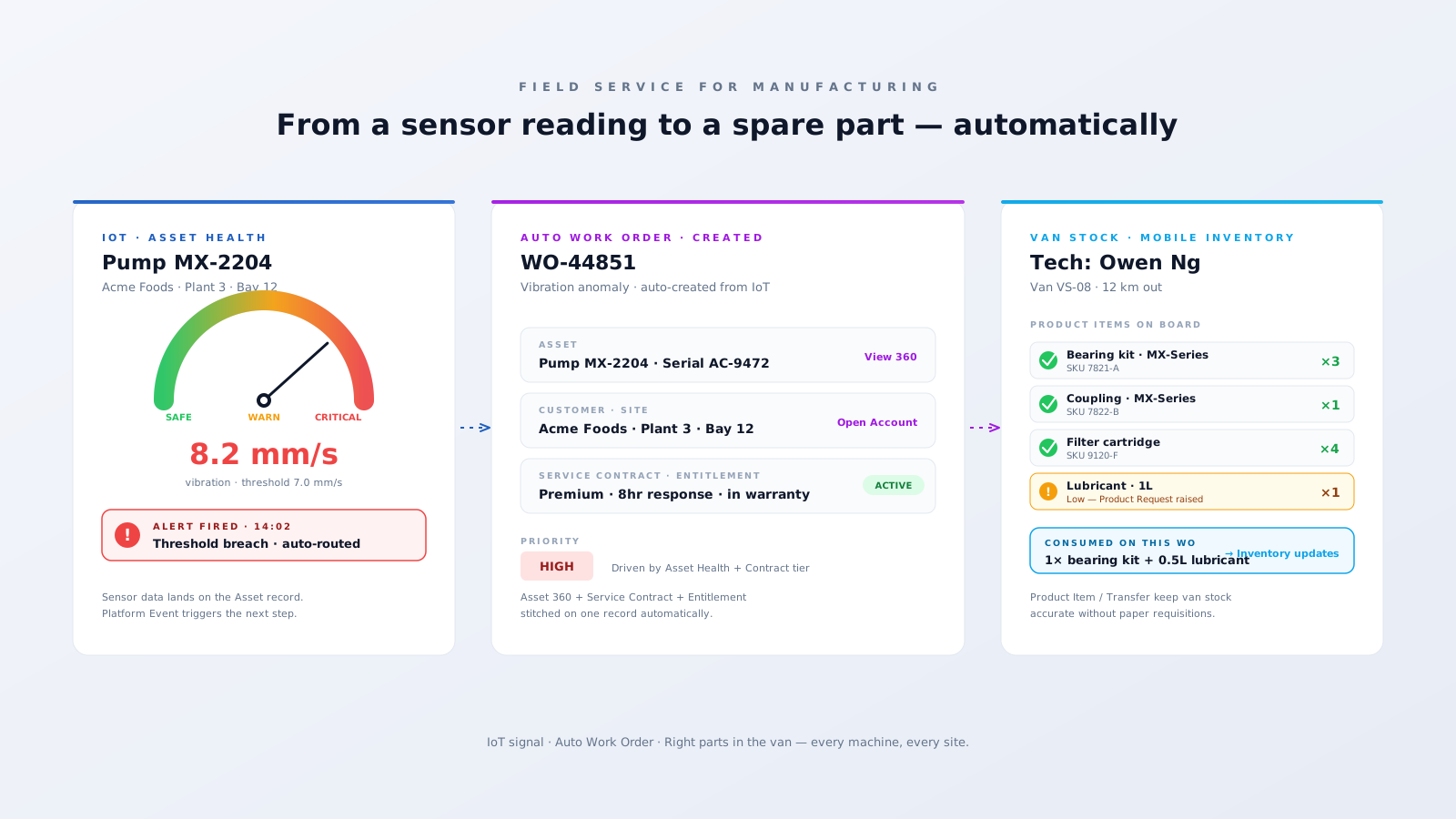
Threshold breached. Work Order created. Tech dispatched with the right kit on the van.
Three problems Field Service was practically designed for.
Sensors fire warnings into someone's inbox. Maybe an engineer triages it on Tuesday. Meanwhile your customer's line is down, your SLA clock is running, and the alert that could have saved both sits unread.
A tech fixes it. The fix enters one system. The warranty claim enters another. Reconciling the two takes a week of back-office time per claim — and warranty leakage hits the P&L every quarter.
Tech rolls up. The right part isn't on the van. Customer waits another day. Multiply that across 200 vans and a few thousand SKUs, and the inventory cost is enormous — and so is the customer pain.
Threshold breached. Work Order created. Tech dispatched with the right kit on the van.
Specific features. Specific outcomes.
Every unit lives as an Asset record with serial number, install date, customer site, warranty status, and a complete service history. When a Work Order opens, the tech sees what's been done, what's under contract, and what's likely to fail next.
Sensor data lands on the Asset. A Platform Event fires the moment a threshold breaks, and a Work Order is auto-created with the right priority, the right Entitlement, and the right tech queue — before anyone reads an email.
Recurring Maintenance Plans by machine model auto-generate preventive Work Orders. Service Contracts and Entitlements decide which jobs are billable and which are warranty — so warranty leakage stops at the Work Order, not in finance.
Product Item, Product Request, and Product Transfer track every SKU on every van. Techs consume parts on the Work Order, van stock auto-decrements, and Product Requests raise restocks before the truck rolls empty.
A working Salesforce Field Service org for an OEM usually looks like this.
Asset 360 for every shipped unit, with parent-child for sub-assemblies and components.
Service Contracts + Entitlements tied to Assets, with warranty windows and SLA tiers.
Maintenance Plans by machine model — preventive cadence, no manual scheduling.
Platform Events from IoT to auto-create Work Orders on threshold breach.
Mobile inventory with Product Item / Request / Transfer for van stock control.
Skill matching on machine-model certifications so the right tech goes.
Dealer / partner extension via Experience Cloud for channel service partners.
ERP & MES integration via MuleSoft for parts, billing, and production data.
The wins our manufacturing clients see once Field Service is running on real machines.
unplanned downtime via IoT-triggered Work Orders
first-time fix rate via Asset 360 + right parts
warranty leakage — Entitlement decides at the Work Order
service revenue from contract upsell & preventive work
We'll show you what Salesforce Field Service looks like running on your real after-sales operation — IoT, Asset 360, contracts, parts, and dealers. An actual configured org, not a slide deck.
Book a 30-min reviewTailored Salesforce consulting that aligns AI, automation, and CRM strategy with your goals — delivering measurable ROI at every stage.
Automate routine tasks, accelerate business processes, and reduce manual effort. Maximise efficiency and achieve your business goals through Salesforce optimisation.
Automate data entry, reduce human error, and improve data quality. Leverage Salesforce's powerful features to gain valuable insights and make informed decisions.
Eliminate manual tasks and optimise resource allocation. Streamline workflows, reduce errors, and achieve significant cost savings that improve your bottom line.
Personalise interactions, improve response times, and build stronger customer relationships. Exceed expectations and drive long-term loyalty with Salesforce AI.