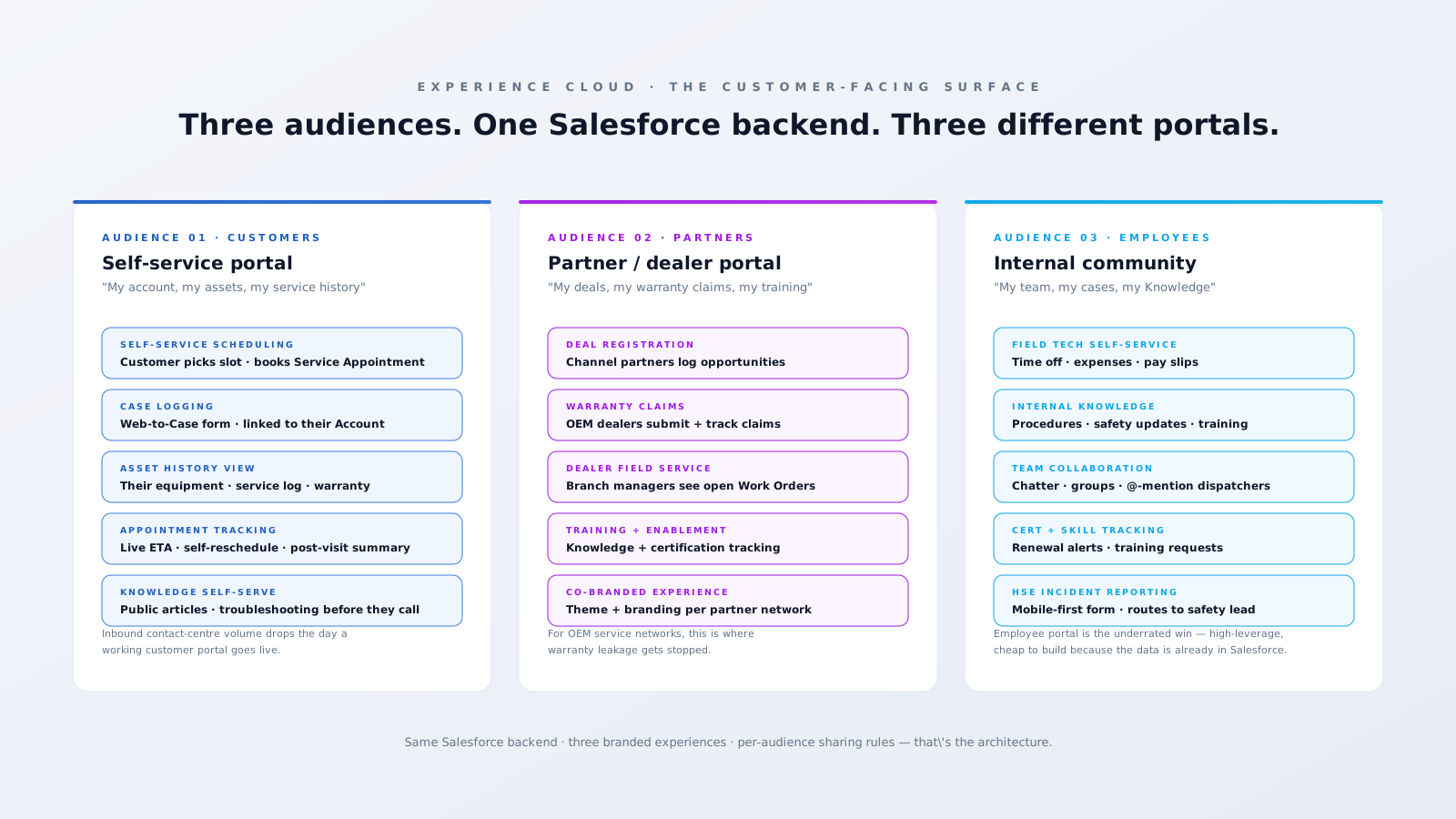
Three audiences. Same Salesforce backend.
Sharing rules + per-audience UI = three different portals, one source of truth.
When the data is in Salesforce but nobody outside Salesforce can see it.
"When's my next visit?" "What's the warranty on my unit?" "Can I reschedule?" Every one of those calls eats agent time and could be a portal click. A self-service portal pulls the answer straight from the customer's Account, Asset, and Service Appointment records.
OEM dealers submitting warranty claims by email. Channel partners registering deals on a Google Form. Distributors checking pricing through CSV exports. A partner portal makes them transactional inside Salesforce — and stops the warranty leakage that hides in unstructured submissions.
A tech wants to find a procedure, log an HSE near-miss, ask a question, request training, see who's on call. None of that is in the Field Service mobile app — that's focused on the appointment. An employee community handles the rest, on the same backend.
Sharing rules + per-audience UI = three different portals, one source of truth.
Real Experience Cloud sites · LWR / Aura · audience targeting · sharing rules.
Account view, Asset history, Case logging, Appointment booking via Field Service Self-Service Scheduling, Knowledge self-serve. Live ETA via Appointment Assistant integration. Outbound contact-centre call volume drops the day this goes live.
Deal registration, warranty claims, dealer Field Service visibility (open Work Orders, parts requests, technician schedules at the branch), training + certification tracking. Per-partner branding via Theme + Audience targeting. Critical for OEM service networks.
Internal knowledge, expense + time-off self-service, HSE incident reporting from mobile, certification tracking, Chatter groups for team collaboration. The high-leverage portal teams routinely under-build.
For modern, fast, mobile-first portals. Faster load times than legacy Aura templates, full Lightning Web Component support, headless API option. The right default for new builds — particularly customer-facing where speed matters.
External sharing rules and Account Relationship Datashare decide what each audience sees. Customer A sees their own Cases and Assets — never anyone else's. Partner network sees only their assigned Accounts. Employees see what their role permits. The architectural mistake here is the most common one we fix.
SAML or OAuth via Identity for External Identity / Communities licences. SSO with Google, Microsoft, Apple, your IdP. Self-registration with email verification. Brand-new login pages that look like the rest of your site, not Salesforce.
Honest qualifying.
Three engagement modes.
30 minutes, no demo, no deck. We'll sketch the audience model, the sharing rules, and the LWR templates that fit your operation.
Book a 30-min review