From channel intake to field closeout
Service Cloud is the foundation. Field Service is the field layer. Built as one operation.
Where the contact-centre debt becomes the field-service debt.
Email goes to a shared inbox, SMS lives in someone's phone, the web form drops into a queue nobody monitors. The customer messages five places and nothing is connected. Omnichannel routing in Service Cloud collapses every channel into one Case stream with one queue.
"Sara always knows how to handle warranty claims for that model." When Sara leaves, that knowledge leaves. Salesforce Knowledge — articles linked at the Case and the Work Order Line Item — externalises the institutional memory and feeds the Pre-Work Brief on the technician's mobile.
Premium-tier customers signed a 4-hour response, 24-hour resolution. When the renewal call comes, you're scrolling spreadsheets to reconstruct timestamps. Entitlement Process timestamps every milestone — acknowledged, assigned, on-site, resolved — automatically. Reporting writes itself.
Service Cloud is the foundation. Field Service is the field layer. Built as one operation.
Named primitives. Real production org.
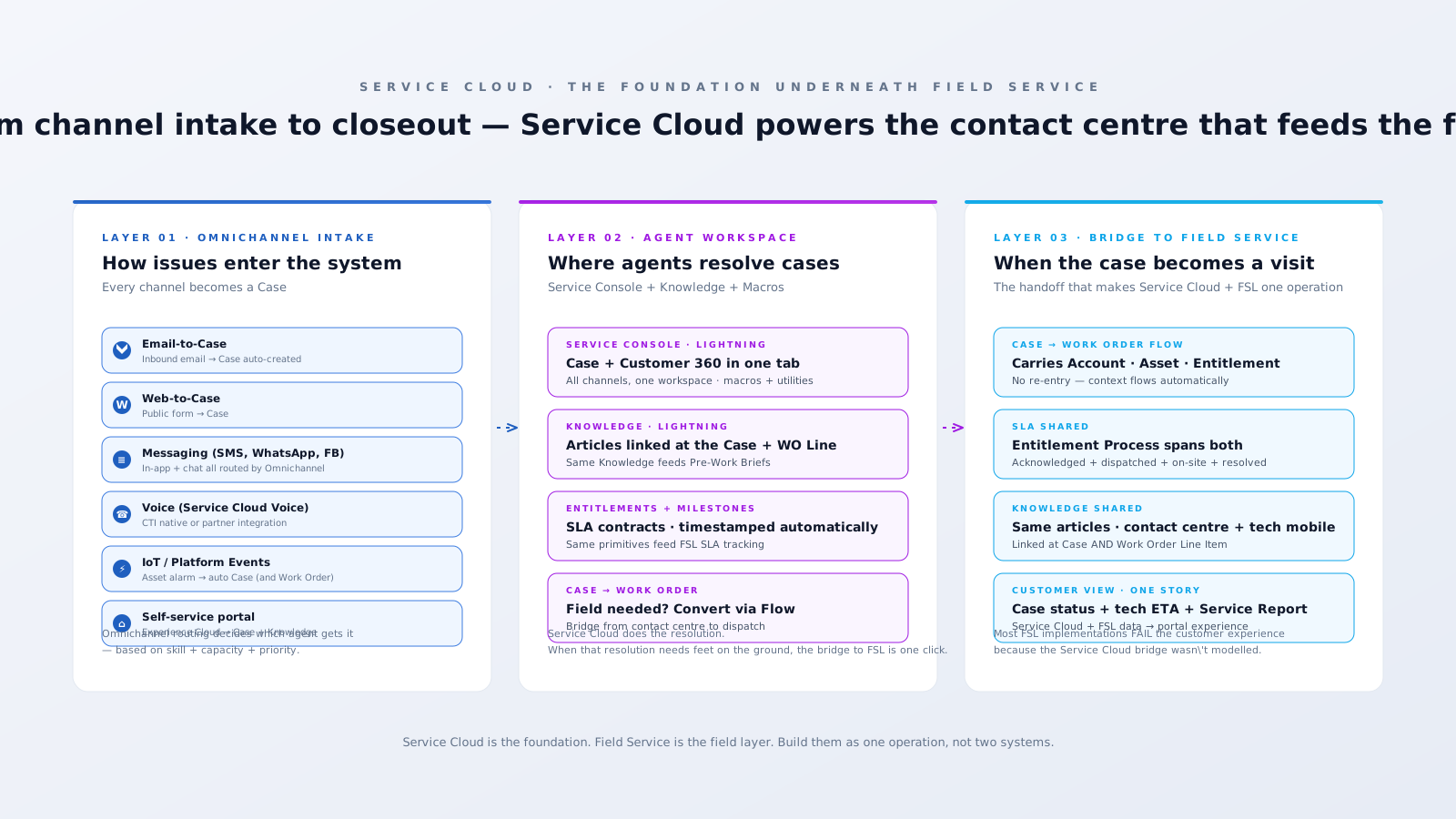
Email-to-Case, Web-to-Case, Messaging (SMS, WhatsApp, Facebook), Live Chat, Service Cloud Voice — every channel surfaces as a Case in one Lightning console. Omnichannel routing assigns by skill, capacity, and priority. Macros and quick actions cut handle time.
Articles authored once, linked at Cases AND Work Order Line Items. Agents see them in the Service Console. Field techs see them in the Pre-Work Brief on mobile. Same source of truth, two surfaces. The Knowledge linkage gotcha is here.
Service Contract → Entitlement → Entitlement Process → Milestones. Every contractual SLA becomes a deterministic timestamp on the Case (and inherits to the Work Order). Reporting writes itself; breaches surface before they hit a credit. Same primitives feed Field Service SLA tracking.
When a Case needs feet on the ground, a Flow converts it to a Work Order — carrying Account, Asset, Entitlement, and Knowledge across automatically. No re-entry. The customer story is one timeline; the data model is one operation.
Native CTI with Amazon Connect (or partner telephony). Calls land in the console, transcripts attach to the Case, and Einstein can summarise the call automatically. Tight integration with Omnichannel routing.
Page layouts that actually fit how agents work, validation rules that prevent bad data, automation that doesn't break under load, release-readiness reviews three times a year. The Service Cloud platform decays without it. Our Managed Services tier owns this.
Honest qualifying.
Three engagement modes.
30 minutes, no demo, no deck. We'll sketch how the Case-to-Work-Order bridge would work for your operation, and what the SLA story looks like end-to-end.
Book a 30-min review