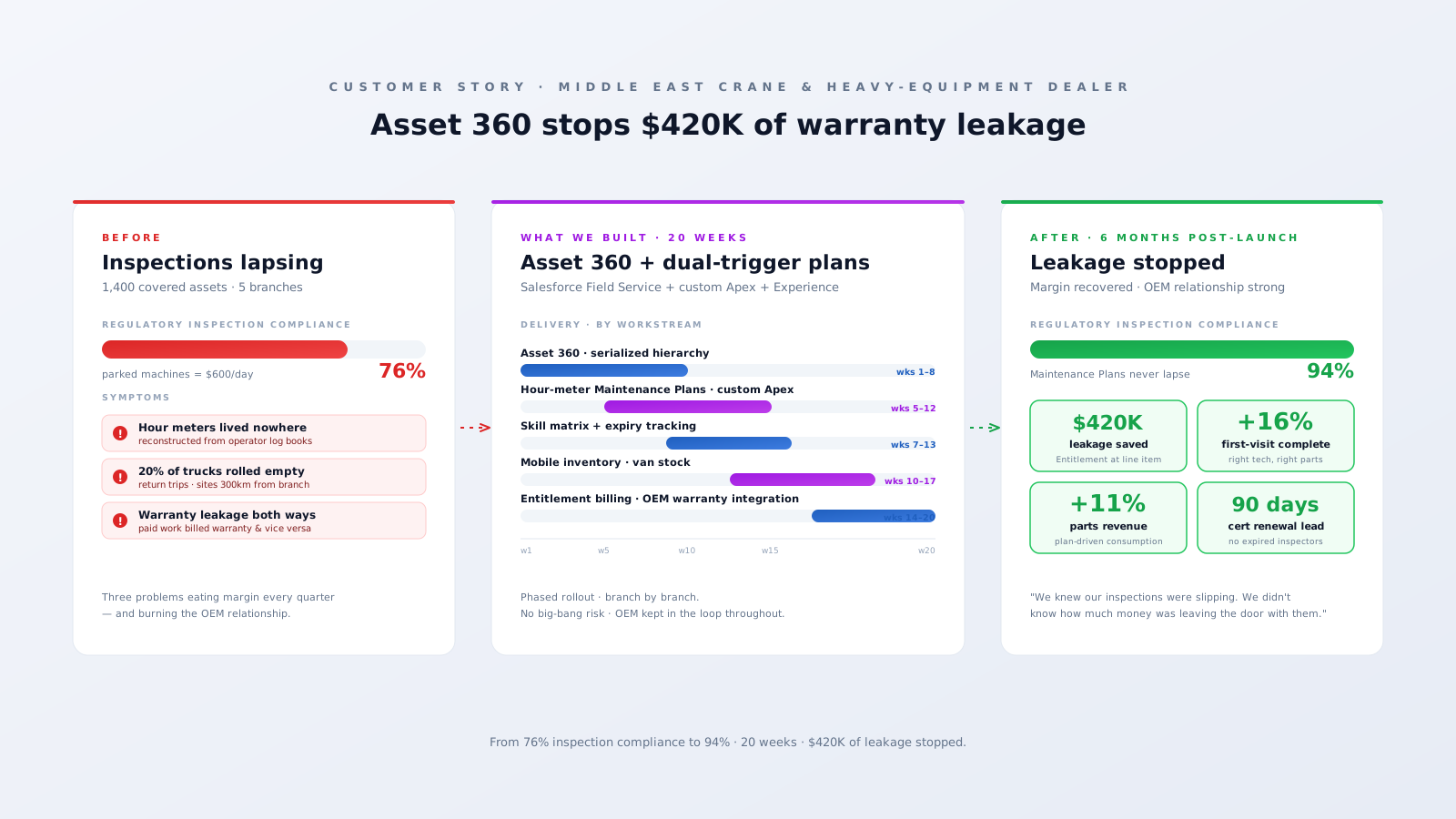
The dealer represented a major OEM crane manufacturer across the Middle East, supporting 1,400 covered assets — mobile cranes, aerial work platforms, telehandlers — under a mix of warranty, time-and-materials, and full-coverage service contracts. Much of the fleet fed large construction and infrastructure projects, where a crane down for a day can stall an entire site.
Three problems were eating margin every quarter:
- Regulatory inspections lapsed. Annual third-party (TPI) crane certification compliance hovered at 76%. Every parked machine cost the customer ~$600/day in lost hire — and cost the dealer the relationship.
- Hour meters lived nowhere consistent. Service intervals (250h, 500h, 1,000h) were reconstructed from operator log books on visit. Half the time the meter on the unit and the meter in the books didn't match. Service was performed too early, too late, or — twice in eighteen months — on the wrong machine.
- Parts trucks rolled empty. ~20% of remote-jobsite visits required a return trip because the right hydraulic cylinder, valve seal kit, or filter wasn't on the van. With sites 300km+ from the branch, a return trip was a lost day plus customer fury.
Underneath all of it, warranty work was being done and billed as paid service, or the reverse — both directions of warranty leakage hitting the P&L.
We rebuilt the dealer's operation around Asset 360 with hour-meter-aware Maintenance Plans, mobile inventory, and contract-aware billing on every line item.
- Asset 360 with serialized parent-child hierarchy. Crane → Boom → Hoist → Cylinder, all serialized. Hour meter, install date, last service, warranty window, full service history live on the unit — not in someone's binder.
- Dual-trigger Maintenance Plans. Trigger on operating hours (250h / 500h / 1,000h interval service) and calendar (annual third-party inspection). Both triggers feed one combined Work Order. Inspections stop slipping.
- Skill expiry tracking. Inspector certifications (crane inspector, NDT Level II, hydraulic) modeled as Service Resource Skills with expiry dates. Match Skills work rule blocks any unqualified dispatch and surfaces who needs recertification 90 days before it lapses.
- Mobile inventory for dealer trucks. Product Item / Product Request / Product Transfer track every SKU on every van. Scheduler sees what's loaded before dispatching. Parts consumed on the Work Order auto-decrement van stock and trigger replenishment to depot.
- Service Contracts deciding warranty vs. billable at the line item. Entitlement Process resolves warranty status per Work Order Line Item against the unit's warranty window and the customer's contract — not after the fact.
- Experience Cloud for branch managers. Each branch sees its own asset book, open Work Orders, technician schedule, and parts inventory.
Tech stack: Salesforce Field Service, Service Cloud, Experience Cloud, custom Apex for hour-meter triggering of Maintenance Plans, mobile inventory, MuleSoft to OEM warranty system.
“We knew our inspections were slipping. We didn't know how much money was driving out of the yard with them.”
— GM, Aftersales & Dealer Operations, anonymized