Asset 360. Regulatory inspection auto-scheduled. Van loaded right.
Hour meter triggers the plan. Maintenance Plan creates the Work Order. Dealer van rolls with every part needed.
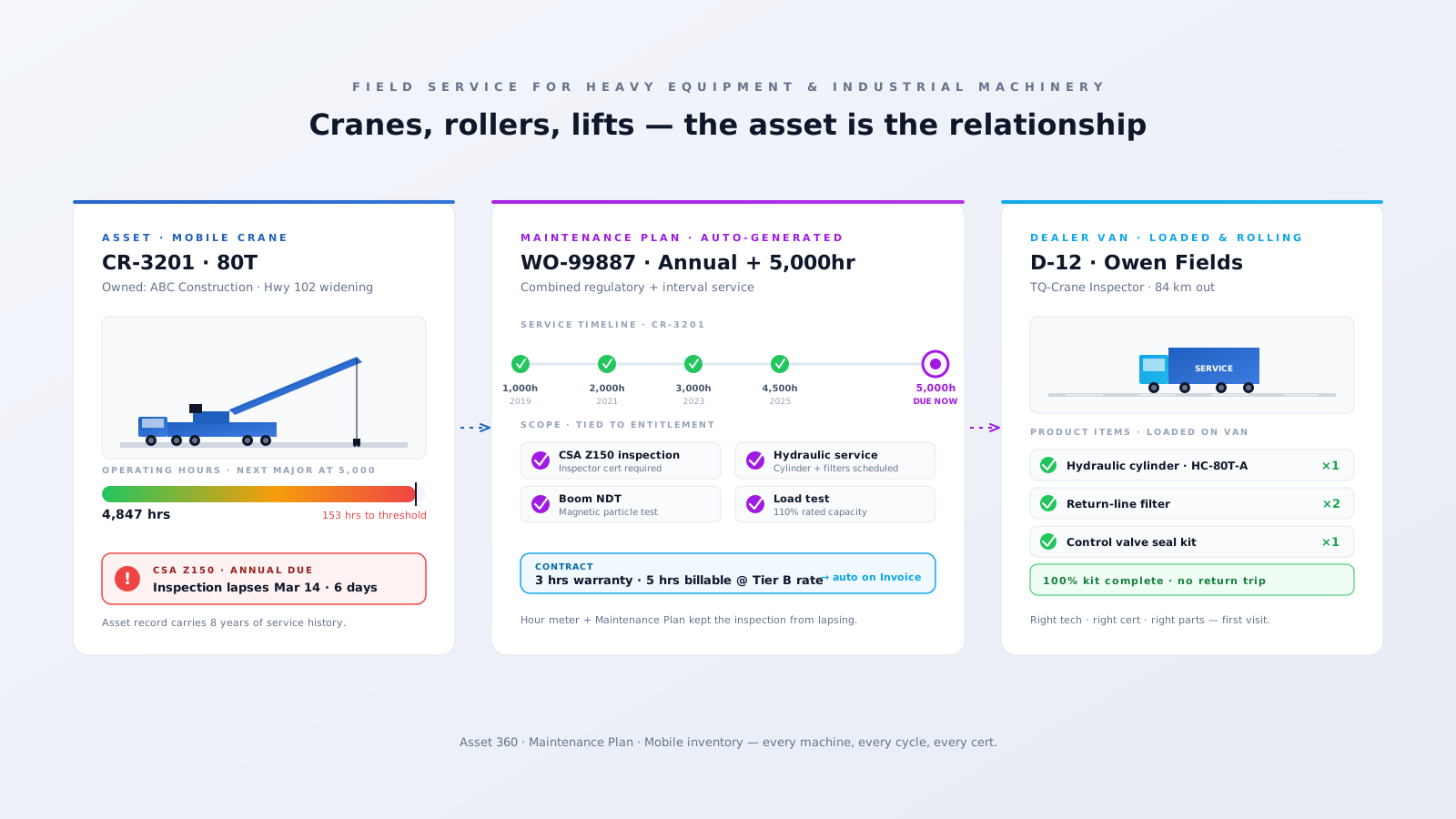
Three problems Field Service was practically designed for.
Annual crane inspection (CSA Z150), boom NDT, load testing, scissor-lift recertification — miss any of it and the machine is parked. A lapsed inspection is a parked machine is a furious customer is a lost rental day.
Service intervals, warranty triggers, residual value — all keyed to operating hours. Without a single source of truth, hours get reconstructed from operator log books and you end up servicing too early, too late, or the wrong machine entirely.
Tech rolls 200 km to a remote jobsite. The right cylinder isn't on the van. Customer is parked another day. The cost of one missing part is enormous when the asset is on a highway widening contract.
Hour meter triggers the plan. Maintenance Plan creates the Work Order. Dealer van rolls with every part needed.
Specific features. Specific outcomes.
Crane → Boom → Hoist → Cylinder → all serialized as Asset records with parent-child relationships. Hour meter, install date, last service, warranty status, and full service history live on the unit — not in someone's binder.
Trigger Maintenance Plans on operating hours (250h, 500h, 1,000h services) or calendar (annual CSA Z150 inspection). Work Orders auto-generate ahead of time with the right scope and the right inspector cert required.
Product Item, Product Request, and Product Transfer track every SKU on every van. The scheduler sees what's loaded before dispatching. Techs consume parts on the Work Order, van stock decrements, and Product Requests fire restocks before the truck rolls empty.
Crane inspector certifications, NDT level II, hydraulic certifications — every cert is a Service Resource Skill with an expiry date. Match Skills blocks any unqualified dispatch and surfaces which inspectors need recertification before it lapses.
A working Salesforce Field Service org for an OEM dealer or rental fleet usually looks like this.
Asset 360 with serialized parent-child for cranes, hoists, cylinders, valves, controls.
Maintenance Plans on operating hours and calendar — both triggers, one Work Order.
Service Contracts + Entitlements deciding warranty vs. billable at the line item.
Mobile inventory via Product Item / Request / Transfer for dealer fleet.
Skill expiry tracking on inspector, NDT, hydraulic, electrical certs.
Polygon Service Territories by dealer territory + remote-site rules.
Field Service mobile with offline access for rural and jobsite work.
Dealer / partner extension via Experience Cloud for channel service.
The wins our heavy-equipment clients see once Field Service is running on real machines.
regulatory inspections on time — Maintenance Plans never lapse
first-visit completion rate via van inventory match
warranty leakage — Entitlement decides at the line item
parts revenue from accurate plan-driven consumption
We'll show you what Salesforce Field Service looks like running on your real fleet — assets, hour meters, dealer dispatch, and parts. An actual configured org, not a slide deck.
Book a 30-min reviewTailored Salesforce consulting that aligns AI, automation, and CRM strategy with your goals — delivering measurable ROI at every stage.
Automate routine tasks, accelerate business processes, and reduce manual effort. Maximise efficiency and achieve your business goals through Salesforce optimisation.
Automate data entry, reduce human error, and improve data quality. Leverage Salesforce's powerful features to gain valuable insights and make informed decisions.
Eliminate manual tasks and optimise resource allocation. Streamline workflows, reduce errors, and achieve significant cost savings that improve your bottom line.
Personalise interactions, improve response times, and build stronger customer relationships. Exceed expectations and drive long-term loyalty with Salesforce AI.